Road to 3 Handicap: My Golf Stats Baseline
14 Aug 2026 · 9 min
Read article
From an 8.8 Handicap Index to 3.0: one ordinary club golfer, 5.8 shots to find, and an honest attempt to discover how much better it is realistically possible to get.
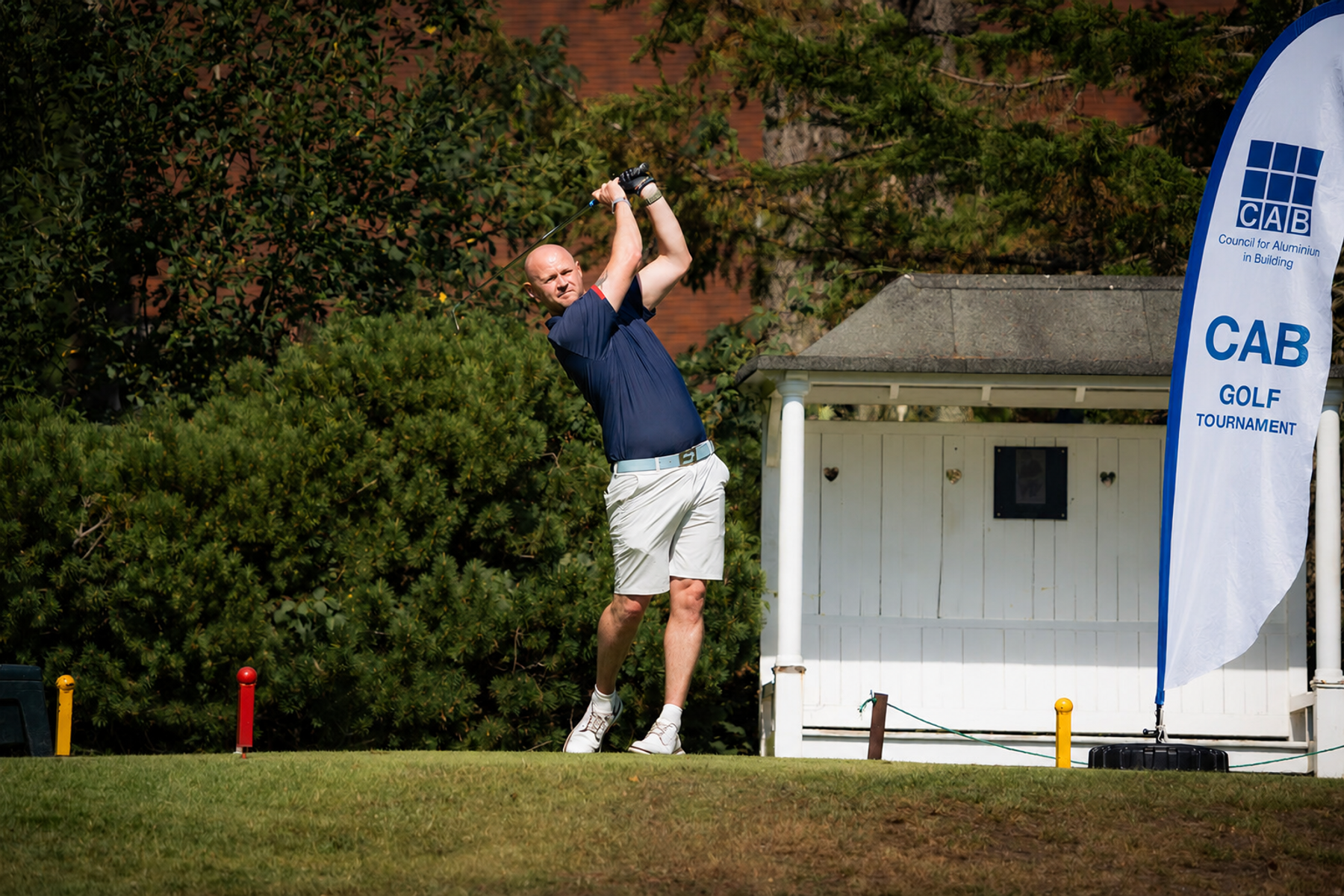
From 8.8 to 3.0. One ordinary club golfer, 5.8 shots to find, and no idea whether I'll actually get there.
How good can an ordinary amateur golfer actually become?
That's the question behind the Bogeys2Birdies Project.
At the start of this project, my Handicap Index is 8.8. I'm already a single-figure golfer, but there's a big difference between playing off 8 and playing off 3.
So I've set myself a target:
That's 5.8 shots I need to find.
And I'm going to document the entire process here on Bogeys2Birdies.
The good rounds. The terrible rounds. Lessons. Practice sessions. Equipment changes. Statistics. Fitness. Course management. Experiments that work and, probably more interestingly, the ones that don't.
This isn't a story about becoming a professional golfer.
I'm not quitting work to spend eight hours a day practising. I don't have unlimited access to coaches, launch monitors and perfect practice facilities.
I'm a normal amateur golfer trying to discover how much better it's realistically possible to get at golf while still having a normal life.
And rather than relying on how something feels, wherever possible I'm going to measure what actually happens.
Welcome to The Bogeys2Birdies Project.
Why 3?
Why not 5? Scratch? Plus 2?
Because I want the target to be difficult enough that simply playing more golf probably isn't going to get me there.
Going from 8.8 to 3.0 requires genuine improvement.
At 8.8, I can already play decent golf. There are rounds where everything feels relatively straightforward.
But there are also rounds where golf reminds me very quickly that I'm an amateur.
That's what makes this interesting.
Finding nearly six shots isn't going to come from discovering one magical swing thought.
It's probably going to require lots of smaller improvements.
One fewer penalty.
One more green.
One fewer three-putt.
A better decision from 170 yards.
Getting up and down once more.
Turning a double bogey into a bogey.
Turning a bogey into a par.
And occasionally turning a par into a birdie.
Which, conveniently, brings us to Bogeys2Birdies.
Bogeys2Birdies is an ongoing experiment in amateur golf improvement.
There is an incredible amount of golf advice available.
YouTube tells us how to swing.
Instagram gives us drills.
Golf magazines tell us which equipment to buy.
Manufacturers promise more distance, forgiveness and accuracy.
Coaches tell us to practise differently.
Golfers tell each other things they've been told for the last 30 years.
But there's one question I'm increasingly interested in:
That's what I want Bogeys2Birdies to investigate.
I'll test different approaches to:
And then I'll look at what happened to my actual golf.
Not:
“I think I'm putting better.”
But:
Did my putting statistics actually improve?
Not:
“This strategy feels safer.”
But:
Did it actually reduce mistakes and lower my scores?
That's the philosophy behind the project.
The project starts at:
And before trying to change anything, I need to understand what that 8.8 actually looks like.
Because a handicap number doesn't tell the whole story.
Two golfers can both play off 8 and have completely different games.
One might hit 12 greens but struggle around them.
Another might hit six greens and have an exceptional short game.
One might hit it 280 yards but lose several balls.
Another might only hit it 220 but rarely make a double bogey.
So one of the first stages of the project is establishing my B2B Baseline.
I'll be tracking areas including:
Scoring average, best rounds, worst rounds, birdies, pars, bogeys and doubles or worse.
Fairways, misses, penalties and eventually dispersion rather than obsessing purely over fairways hit.
Greens in regulation, misses and performance from different distances.
Up-and-down performance and where shots are being lost around the green.
Putts per round, three-putts and performance from different distances where the data is available.
Penalty shots, doubles and the unnecessary errors that turn perfectly reasonable rounds into frustrating ones.
The objective isn't to track numbers simply because I can.
It's to answer:
Where are the 5.8 shots hiding?
That's ultimately what this entire project is going to try to answer.
I don't know the answer yet.
And that's important.
It would be easy to launch a golf website and publish:
“10 Things You Need to Do to Become a 3 Handicap.”
But I haven't reached 3.
Pretending I already know exactly how to do it would defeat the point of Bogeys2Birdies.
Instead, we're going to find out.
My initial theory is that the improvement will come from several areas rather than one dramatic swing change.
How many shots do amateur golfers lose because of poor decisions rather than poor swings?
Attacking difficult pins.
Taking on unnecessary carries.
Hitting driver when the risk isn't justified.
Trying miracle recovery shots.
Leaving approaches short.
One of the major themes of the project will be testing whether playing smarter golf can lower scores without changing the golf swing at all.
Hitting golf balls isn't necessarily the same as practising.
I want to find out what happens when limited practice time is given structure and purpose.
If I've only got 45 minutes available, what's the best use of it?
That's much more relevant to me — and probably many golfers reading this — than a practice programme requiring three hours every day.
Golfers naturally gravitate towards things they enjoy practising.
That's not necessarily where the biggest opportunity lies.
The data will help determine where I'm actually losing shots, and I'll build experiments around those areas.
Golf fitness has become a huge part of the modern game.
I'm interested in whether realistic improvements in strength, mobility and speed translate into measurable changes on the golf course.
Not simply:
Can I swing faster?
But:
Does getting physically better ultimately help me score better?
This might ultimately be the biggest one.
A lower handicap isn't awarded for having a prettier swing.
Golf is about getting the ball into the hole.
Part of the project will therefore focus on becoming better at scoring with the game I have, rather than endlessly chasing a technically perfect golf swing.
This is where the Experiments side of Bogeys2Birdies comes in.
I'll take common golf advice and put it into practice over a defined period.
For example:
Does ignoring the flag actually improve GIR and scoring?
Amateur golfers are constantly told they don't take enough club. What happens if I deliberately change that?
Does a small amount of consistent practice translate into fewer putts on the course?
Does choosing a supposedly safer club actually reduce scoring mistakes?
Do I score better when I properly prepare before a round?
Each experiment will have a clear:
Hypothesis
Method
Starting point
Results
Verdict
Some will work.
Some probably won't.
That's exactly what I want to find out.
Equipment is inevitably going to be part of the journey.
But I don't want Bogeys2Birdies to become another website where every new driver receives 4.8 stars and somehow goes longer than the previous one.
The question will always be:
That might mean comparing premium and cheaper golf balls.
Testing whether a new driver actually changes dispersion.
Seeing whether a rangefinder improves decision-making.
Trying training aids.
Looking at GPS watches.
Or even asking whether keeping older equipment is the smarter decision.
If something costs £500 and doesn't meaningfully improve my golf, I want to say so.
If something costs £20 and genuinely helps, that's far more interesting.
To keep the project honest, I'm setting some basic rules.
If an experiment hasn't been completed, it doesn't get presented as fact.
I don't get to remove a terrible round because it ruins the statistics.
Unfortunately.
There will always be subjective elements to golf, but wherever practical I'll use data alongside them.
Whether I've bought something myself, borrowed it or eventually received it from a manufacturer, I'll make that clear.
The goal is:
If I reach 4.2 and can't get any lower, that's part of the story.
And if I never reach 3?
That's potentially even more interesting.
I genuinely don't know.
It could happen much faster than expected.
It could take several seasons.
I might never do it.
Golf improvement isn't linear.
I fully expect the handicap graph to look something like:
8.8 → 8.1 → 8.5 → 7.6 → 7.9 → 7.2...
rather than a beautiful straight line towards 3.
That's why I'll publish regular Project Reports showing exactly where things stand.
Each report will look at:
Current handicap
Rounds played
Scoring
Key statistics
Experiments completed
What improved
What didn't
What I'm working on next
So anyone following the project can see whether any of this is actually working.
This is where I eventually want Bogeys2Birdies to become something bigger.
My journey from:
is the original B2B Project.
But every golfer has their own version.
Yours might be:
28 → 20
18 → 12
12 → single figures
5 → scratch
Or simply:
Break 100
Break 90
Break 80
The number doesn't really matter.
The principle is the same.
Understand your game.
Find where the shots are going.
Test ways of improving it.
Measure what happens.
Keep what works.
Discard what doesn't.
Then go again.
Eventually, I want Bogeys2Birdies readers to be able to create and track their own projects alongside mine.
Because that's essentially what we're all trying to do.
Fewer doubles.
Fewer bogeys.
More pars.
More birdies.
Lower scores.
And hopefully a little less time sitting in the clubhouse wondering why you tried to hit a 4-iron through a gap between two trees.
Bogeys2Birdies isn't about pretending amateur golfers can turn themselves into tour professionals.
It's about finding out how good we can actually get.
For me, the first destination is clear:
There are 5.8 shots to find.
Let's find them.
I'll be documenting the entire Road to 3 here, including every experiment, Project Report, significant round, equipment test and lesson learned along the way.
You can follow the latest Project updates, see the current Experiments, or explore the Data behind the journey.
And soon, you'll be able to start your own Bogeys2Birdies Project and find out where the shots are hiding in your game.
The chase starts at 8.8.
Target: 3.0.
Comments
No approved comments yet. Start the conversation.